Wednesday, September 17, 2008

Trading Places: The demographic inversion of the American city


Source: The New Republic

In the past three decades, Chicago has undergone changes that are routinely described as gentrification, but are in fact more complicated and more profound than the process that term suggests. A better description would be "demographic inversion." Chicago is gradually coming to resemble a traditional European city--Vienna or Paris in the nineteenth century, or, for that matter, Paris today. The poor and the newcomers are living on the outskirts. The people who live near the center--some of them black or Hispanic but most of them white--are those who can afford to do so.

Developments like this rarely occur in one city at a time, and indeed demographic inversion is taking place, albeit more slowly than in Chicago, in metropolitan areas throughout the country. The national press has paid very little attention to it. While we have been focusing on Baghdad and Kabul, our own cities have been changing right in front of us.

[ . . . ]

If you want to see this sort of thing writ large, you can venture just across the Canadian border to Vancouver, a city roughly the size of Washington, D.C. What makes it unusual--indeed, at this point unique in all of North America--is that roughly 20 percent of its residents live within a couple of square miles of each other in the city's center. Downtown Vancouver is a forest of slender, green, condo skyscrapers, many of them with three-story townhouse units forming a kind of podium at the base. Each morning, there are nearly as many people commuting out of the center to jobs in the suburbs as there are commuting in. Two public elementary schools have opened in downtown Vancouver in the past few years. A large proportion of the city's 600,000 residents, especially those with money, want to live downtown.

Click for Full Story

Everything Is Going To Be Alright: Demolition and adaptive reuse in Detroit


Source: Next American City

Once hailed as “The Paris of The West” and a national center for investment and development, Detroit has become a symbol of failed urban policy over the past 40 years of decline. Vacant skyscrapers and factories dotting Detroit’s skyline testify to the city’s high water mark, a stirring juxtaposition of old and new, decayed and opulent.

Many Detroiters see these empty buildings as liabilities rather than opportunities. The city’s hesitation to re-use abandoned structures is deeply ingrained: “In a city so starved for investment,” says University of Michigan Professor Scott Kurashige, “Detroit chooses short-term profits from marginally beneficial new developments, like parking lots, over preserving buildings with immense potential.” 

Click for Full Story


Tuesday, September 16, 2008

PARK(ing) Day 2008

PARK(ing) Day is a one-day, global event centered in San Francisco where artists, activists, and citizens collaborate to temporarily transform metered parking spots into “PARK(ing)” spaces: temporary public parks.

Click for More

Events: Friday Forum 9/19: The Struggle for Equitable Development in Pilsen

Friday Forum 9/19 in CUPPA Hall Room 110 @ Noon

The Struggle for Equitable Development in Pilsen

The Pilsen Alliance's mission is to preserve the historic, cultural, and working-class identity of Pilsen by developing grassroots leadership and facilitating advocacy and organizing campaigns that promote self-determination, demand accountability and build democracy to impact social change.

Pilsen Alliance is working with its members and organizations from across Chicago on a campaign for transparency on how TIF (Tax Increment Financing) dollars are being spent. Despite the fact that the TIF can be used as a tool for economic development, it has been used as a tool to displace low and middle-income families across the city.

The TIF has led to drastic increases in property taxes and the funds generated by the TIF have been given to institutions and corporations that have cozy relationships with city officials. The money has NOT been used to secure living-wage jobs or the construction of affordable housing for community members.

Who controls how the money is spent? Who decides what projects to build? Who decides what to do with our tax dollars?
Come hear about the history and background to the struggles over equitable development in Pilsen and learn about the future organizing goals of the Pilsen Alliance.

Alejandra L. Ibanez, Executive Director
Rodrigo Paredes, Community Education Leadership Coordinator
Pilsen Alliance

Monday, September 15, 2008

Job Opportunity: City of Wausau, WI

The CITY OF WAUSAU, WI, population 40,000, is commencing a search to fill an Associate City Planner/Zoning Administrator position.

This position will assist in the administration of the City’s zoning ordinance and provide support for current and long term physical and economic development planning for the City.

This position requires accuracy, proficiency and independent judgment in the administration of the zoning ordinance and implementation of the City Comprehensive Plan related to land use, growth staging, annexation, transportation, economic development and capital improvements planning.

Minimum requirements include a Bachelor’s Degree in urban or regional planning, public administration or closely related field with a minimum of two years of progressively responsible experience in urban planning or community development preferred; valid WI driver’s license; availability for off-hour work assignments, meetings and activities.

Click for More

News: Durbin pushing investment in Amtrak system

Source: Chicago Tribune

Amtrak ridership nationally is booming, seats are sold out on many routes through Illinois and the cash-strapped national passenger railroad is limping along the tracks with 35-year-old coaches and baggage cars dating to the Eisenhower presidency.

That's the predicament Sen. Dick Durbin (D-Ill.) lashed out at Wednesday as he called for a major reinvestment in Amtrak service and reviving rail-car manufacturing in the U.S. to create thousands of jobs.

Amtrak ticket sales indicate that the public appetite for inter-city rail service frequently outstrips the supply of trains, due in part to gas prices hitting record levels this year and, looking ahead, airline cutbacks already sending airfares soaring for the Thanksgiving and winter travel periods.

Click for Full Story

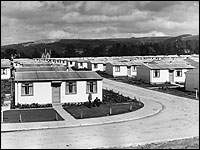
Prefab: From Utilitarian Home To Design Icon

Prefab: From Utilitarian Home To Design Icon

Source: NPR Morning Edition

Some of the world's most famous architects have tried to use mass production techniques to design houses.

Now, an exhibit at New York's Museum of Modern Art explores the history of the prefab house. The exhibit comes as computer design is revolutionizing the way prefabricated houses are constructed.

Click for story

Friday, September 12, 2008

Event: UPPSA Scavenger Hunt

Come to our Scavenger Hunt this Saturday from 11-2pm.

This scavenger hunt will illuminate some useful services and resources on campus specific to MUPP students. We created this scavenger hunt after brainstorming things we wish we had known but were not told during the program orientation. Our aim is to provide an interesting way to become familiar with these resources and to provide another opportunity to get to know your colleagues.

We will first meet in the basement of CUPPA Hall and afterwards, we are going to have lunch and mingle.

The National Charrette Institute debut training in Chicago

Announcing The NCI Charrette System Certificate Training
Debuting in Chicago and Portland this October

A major rewrite to the NCI Certificate program, including:
• sustainability measures
• charrette video
• four diverse case studies
• new group exercises
NCI Charrette Management and Facilitation Certificate Training
Also debuting in Portland in October

This revised training includes:
• The essentials of detailed day-to-day charrette management
• The indispensable skills of public meeting planning and facilitation

These trainings have been approved for AICP and AIA continuing education credits.

For more information, visit our programs page.

Tuesday, September 9, 2008

Events: UPPSA General Meeting Friday 5-6pm in the Grad Student Lounge

Hello MUPP Students!

UPPSA (Urban Planning & Policy Student Association) would like to invite you to our first general assembly meeting of the semester!

Friday September 12th at 5-6pm in the Grad Student Lounge, in the basement of CUPPA Hall.

Reasons you should come:
1. Mingle with fellow students
2. Learn how to get involved with your college and your community
3. Free refreshments!
4. It's been a while since you've visited the CUPPAH basement lounge.
5. You needed an event to fill up that troublesome Friday, 5-6pm time slot anyway.

What you should bring:
1. If you haven't already filled one out for Fall 2008, please print out and complete the attached Membership Registration Form and bring it to the meeting.

2. If you are a new student or became an UPPSA member last fall, we need your dues ($15, check or money order made payable to UPPSA).

3. If you are interested in being an APA PSO member or the 1st year student APA rep, fill out the respective form (attached) and bring it to the meeting.

4. This is the really important one: In order to give you all the member benefits, we have to have your UIN, so, if nothing else, please remember to at least bring your I-Card with you.

5. Also, we will be deciding on special committees this Friday. Take a gander at the committee descriptions (attached) to see which one is the best fit for you.

If you cannot make it to the meeting, but would like to be involved, please send an email back to uppsainfo [at] gmail.com with your information and any questions you may have.